
Workshop & Events
Medication
Meditation is a practice in which an individual uses a technique – such as mindfulness or focusing the mind on a particular object, thought, or activity – to train attention and awareness and achieve a mentally clear, emotionally calm, and stable state. Meditation is practiced in numerous religious traditions.
If you have been conscious for the past couple of years, you know there has never been a greater need for meditation. As we become more disconnected & distracted, our world is yearning to rediscover the ancient & sacred relationship with our souls. Knowing how to guide a meditation class is reconnecting our world to what we have lost, but hope to find, one meditation experience at a time.
How to Structure a Meditation Class
Knowing how to lead a meditation group begins with having a defined structure. Guided meditation classes are usually done with a specific purpose or outcome.
There are no hard and fast rules for leading meditations, but best practices and proven frameworks exist.
- Start with a Topic & Discussion Knowing how to start a meditation class is critical. How you begin each class sets the tone, expectations & focus for the experience.
- Progressive Relaxation Once everyone is comfortable, progressive relaxation is the next step in guiding participants into a meditative state. Start with several cycles of slow, focused breathing. Establish the rhythm of inhalation and exhalation for your participants initially by SILENTLY counting to yourself: 4 seconds on the inhalation, 2 seconds at the top of the breath, 4 seconds on the exhalation, and 2 seconds at the bottom.
- Engage the Imagination At this point, your audience’s mind and body are relaxed and ready to use their imagination. This step aims to help your participants explore their thoughts and feelings or prompt them to utilize this fertile state of mind to contemplate and self-reflect.
- Be Silent for a Time Experienced meditation facilitators know that the secret to leading an excellent meditation class is maximizing the time spent in silence. For your participants, the most impactful moments of a meditation class will always happen when you are not speaking and when your participants can explore their thoughts, feelings & emotions without interruption or suggestion.
- Slowly Bring the Meditation to a Close After sufficient silent reflection time has passed, gently reintroduce your voice by saying something like, “And slowly, coming back to the sound of my voice.” This is a great time to ask your participants to take something with them from the experience. It can be in the form of a realization or a simple recognition of a feeling.
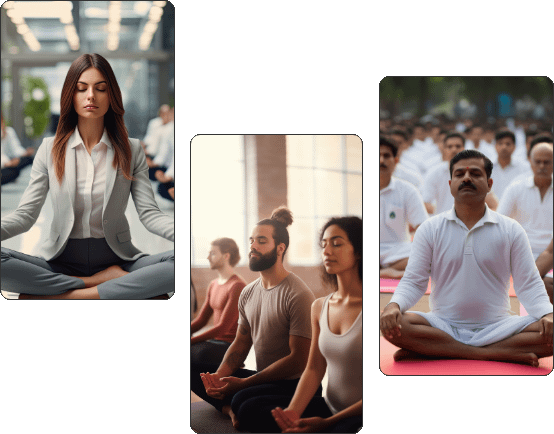
5 Tips to Run a Meditation Class Like a Pro
- Prepare & Practice Your Performance Leading a meditation class is a performance. Unless you are a master guided meditation facilitator, planning and rehearsing the meditation beforehand is essential.
- Assume a Posture of Confidence When you begin your introductory talk, sit or stand up straight, with your back tall and hands placed in a comfortable position. For example, you can interlock your fingers with your index fingers pointing to touch at the tips. Return to this position with your hands whenever you’re not using them for something else.
- Play Ambient & Featureless Meditation Music Background music is important to give participants’ wandering minds something to focus on throughout the meditation. Additionally, music helps mask distracting noises inside and outside the room (loud breathing, coughing, or traffic outside). When selecting your music, choose music without lyrics and variable volume.
How Much Should You Charge for a Meditation Class?
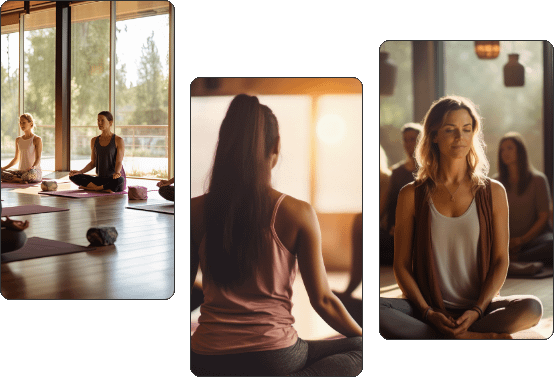
Benefits of taking meditation
Meditation is practiced to train attention and awareness and achieve a mentally clear, emotionally calm, and stable state. It is done through a practice where an individual uses a technique, such as mindfulness or focusing the mind on a particular object, thought, or activity. Meditation is widely accepted and practiced in numerous religious traditions.
There is no right or wrong way to meditate, but it’s essential to find a correct practice that helps you to meet your needs and overcome issues and manage symptoms of conditions such as:
- Stress
- Anxiety
- Asthma
- Cancer
- Chronic pain
- Depression
- Heart disease
- High blood pressure
- Irritable bowel syndrome
- Sleep problems
- Tension headaches
Frequently Asked Questions
What is needed to meditate?
The essential tools you can bring to your meditation practice are patience, kindness, and a comfortable place to sit.
01
What factors affect meditation?
The following five factors emerged: refraining from catastrophic thinking, logical objectivity, self-observation, acceptance, and detached coping.
02
How often should you meditate?
To be clear, no guidelines exist for how often you should meditate.
03
How long should meditation last?
If you're a beginner and looking to reduce stress, then 10 minutes should be enough. However, if you're looking to focus more on calmness and increased concentration, up to 30 minutes might be better, as you'll have time for some light stretches and breathing techniques.
04
What is the purpose of meditation?
The basic concept of meditation is that it is a practice that connects the mind and the body. Its purpose is to help increase physical and mental peace and calm, allowing you to learn how to live more fully in the present.
