
Weekly/Daily Meditation
What is Weekly/Daily Meditation
Weekly/Daily meditation refers to setting aside a specific time each day or week to engage in meditation. It involves dedicating a few minutes or longer to sit in stillness, cultivate mindfulness, and explore one’s consciousness.
Whether practiced daily or weekly, meditation provides an opportunity to reduce stress, enhance self-awareness, and find inner peace. Daily meditation offers a reset, while weekly sessions allow deeper introspection and reflection. The duration and frequency may vary, but the core purpose remains: to create a sacred space for quieting the mind, connecting with oneself, and experiencing the profound benefits of a regular meditation practice.
Why Meditate Daily or Weekly
- Reduced stress and anxiety: Meditation can help reduce stress and anxiety by teaching you to focus on the present moment and let go of negative thoughts and emotions.
- Improved sleep quality: Meditation can help improve sleep quality by reducing stress and anxiety and teaching you how to relax your body and mind.
- Increased concentration: Meditation can help increase concentration by teaching you to focus on the present moment and avoid distractions.
- Improved overall well-being: Meditation can help to improve overall well-being by reducing stress, anxiety, and depression and by increasing positive emotions such as happiness and gratitude.

What Are The Benefits of Weekly/Daily Meditation
- Reduced stress and anxiety: Meditation can help reduce stress and anxiety by teaching you to focus on the present moment and let go of negative thoughts and emotions.
- Improved sleep quality: Meditation can help improve sleep quality by reducing stress and anxiety and teaching you how to relax your body and mind.
- Increased concentration: Meditation can help increase concentration by teaching you to focus on the present moment and avoid distractions.
- Improved overall well-being: Meditation can help to improve overall well-being by reducing stress, anxiety, and depression and by increasing positive emotions such as happiness and gratitude.
How to Get Started with Weekly/Daily Meditation
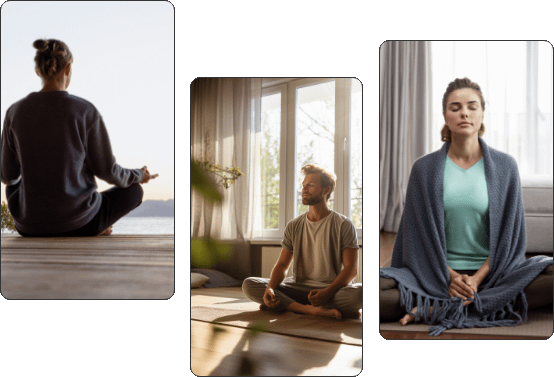
Find a quiet place where you will not be interrupted.
Sit in a comfortable position, either on the floor or in a chair.
Close your eyes and focus on your breath.
As you breathe in, say to yourself, "I am breathing in."
Continue to focus on your breath for as long as you like.
How To Start a Meditation Habit?
Find a quiet place where you will
not be interrupted. This could be your bedroom, a yoga studio, or a park bench.
Set aside some time each day for meditation.
Even if it's just 5 minutes, stick to your schedule.
Find a meditation style that you enjoy.
There are many different types of meditation, so experiment until you find one relaxing and beneficial.
Be patient and consistent
It takes time to develop a meditation habit, so keep going even if you don't see results immediately. Just keep practicing, and you will eventually see the benefits.
Make it easy for yourself.
If you have to set up a lot of props or find a special place to meditate, you're less likely to stick with it. Try meditating in bed, on your couch, walking, or sitting in your car.
Find a meditation buddy.
Having someone to meditate with can help you stay accountable and motivated.
Frequently Asked Questions
How does meditation reduce stress and anxiety?
Meditation can help you lower your stress and anxiety levels by activating the parasympathetic nervous system, which is responsible for relaxation and recovery. Meditation can also help you cope with anxiety by teaching you to observe your thoughts and emotions without judgment or attachment.
01
How does meditation improve focus and memory?
Meditation can help you improve your focus and memory by training your attention and concentration skills. Meditation can also help you prevent mind-wandering and distraction, which can interfere with your productivity and performance.
02
How does meditation enhance mood and happiness?
Meditation can help you enhance your mood and happiness by increasing positive hormones such as serotonin and dopamine in your brain. Meditation can also help you cultivate positive emotions such as gratitude, compassion, and joy.
03
How does meditation boost immunity and health?
Meditation can help you boost your immunity and health by stimulating the production of antibodies and natural killer cells that fight infections and diseases. Meditation can also help lower your blood pressure, heart rate, inflammation, and pain.
