
Meditation For
Children and Teens
Meditation to channel energy.
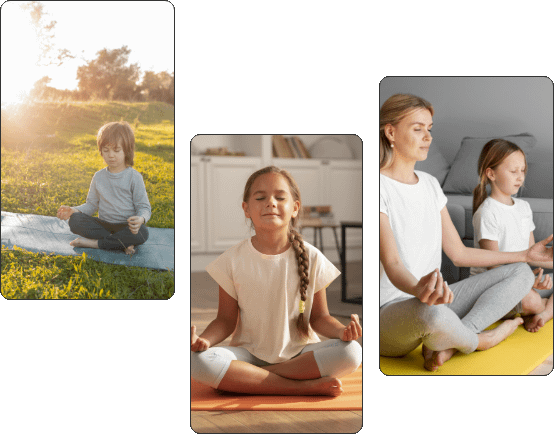
Benefits of Meditation for your kids
Meditation Techniques for Kids
Observe your breath as if it was your best friend
The best way to start meditation for your children is to ask them to close their eyes and breathe in and out slowly. And just observe the breath for 2-3 minutes. Have them say ‘Hello’ and ‘Bye’ to their breath as they inhale and exhale, respectively.
Breathe your way into meditation with pranayamas.
After a good physical session outdoors, children usually come home tired. Sometimes, they are upset because they disagree with their friends, or they are moody because, well, kids are kids! At this time, give them your full attention.
Begin your day with a simple mantra for meditation.
Children normally need some instructions. While their myriad thoughts are swift and varied, they generally don’t enjoy spending time alone, especially those under 10. You might discover that even the quiet ones dislike closing their eyes and sitting alone. It might even scare them. In such a scenario, giving them the security and support of a mantra would be a good idea.
Chant Sanskrit shlokas to ground children
How often have you caught yourself looking wondrously at your child, admiring the energy, quickness, and dexterity before you? The pure, raw talent is awe-inspiring. One moment later, you make the inevitable ‘mistake’ of blinking your eyes. And ironically, those very same qualities drive you up the wall. Because, like it or not, children occasionally put their natural talents towards less-admirable ends – talking back, fibbing, and giving excuses, to name a few of their milder transgressions.
20-20-20: Quick eye exercise
Staring at the screen for long hours can be tiresome and tiring for anyone. Ask your children to do this simple 1-minute exercise to relax their eyes. After every 20 minutes, they must look at a point 20 feet away and blink for 20 seconds.
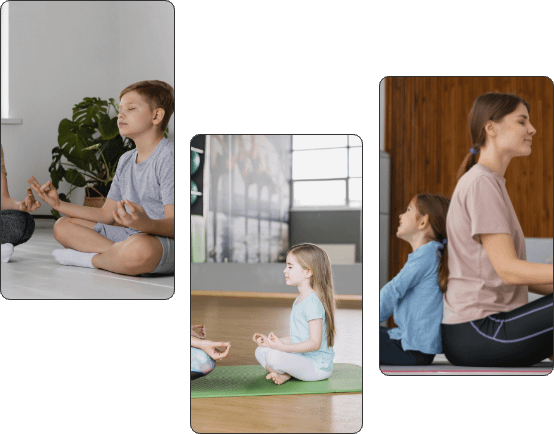
Use of meditation for your kids
With meditation, the masked innate nature of your child comes out. And this innate nature is pure and beautiful. And brings joy. In this space, children are relaxed, calm, and energized. Meditation lends focus to the restless child, sensitizes the careless child, composes the nervous child, and softens the aggressive child.
So, it naturally follows that parents should take advantage of this simple tool for their children, especially teenagers, who are naturally moody and restless.
Frequently Asked Questions
Is it good for kids to meditate?
Research on the Benefits of Meditation in Children, Several studies in school settings also show improved attention and behavior.
01
What are the powers of meditation for kids?
Meditation helps children improve their listening, problem-solving skills, deep breathing techniques, and visualization and encourages them to use positive affirmations.
02
What is the mantra for meditation?
Mantra is a Sanskrit term, with “man” meaning “mind” and “tra” meaning “release.” Think of a mantra — a word or phrase you repeat during meditation — as a tool to help release your mind.
03
Which mantra is very powerful?
Om Namah Shivaya – Mantra to Remove Negative Energies
04
What is the rule of meditation?
Watch Your Breath
